Designing a credibility-first digital platform for Green Infrastructure Partners
Role
UX Designer & Researcher
Timeline
2025 - 2026
Project Type
B2B Infrastructure, Procurement & Proof, Talent & Brand Perception
Status
Design Complete, Implementation in Progress
Green Infrastructure Partners is a rapidly growing, acquisition-driven infrastructure firm operating at national scale, where credibility, safety, and proof directly influence procurement and career decisions.
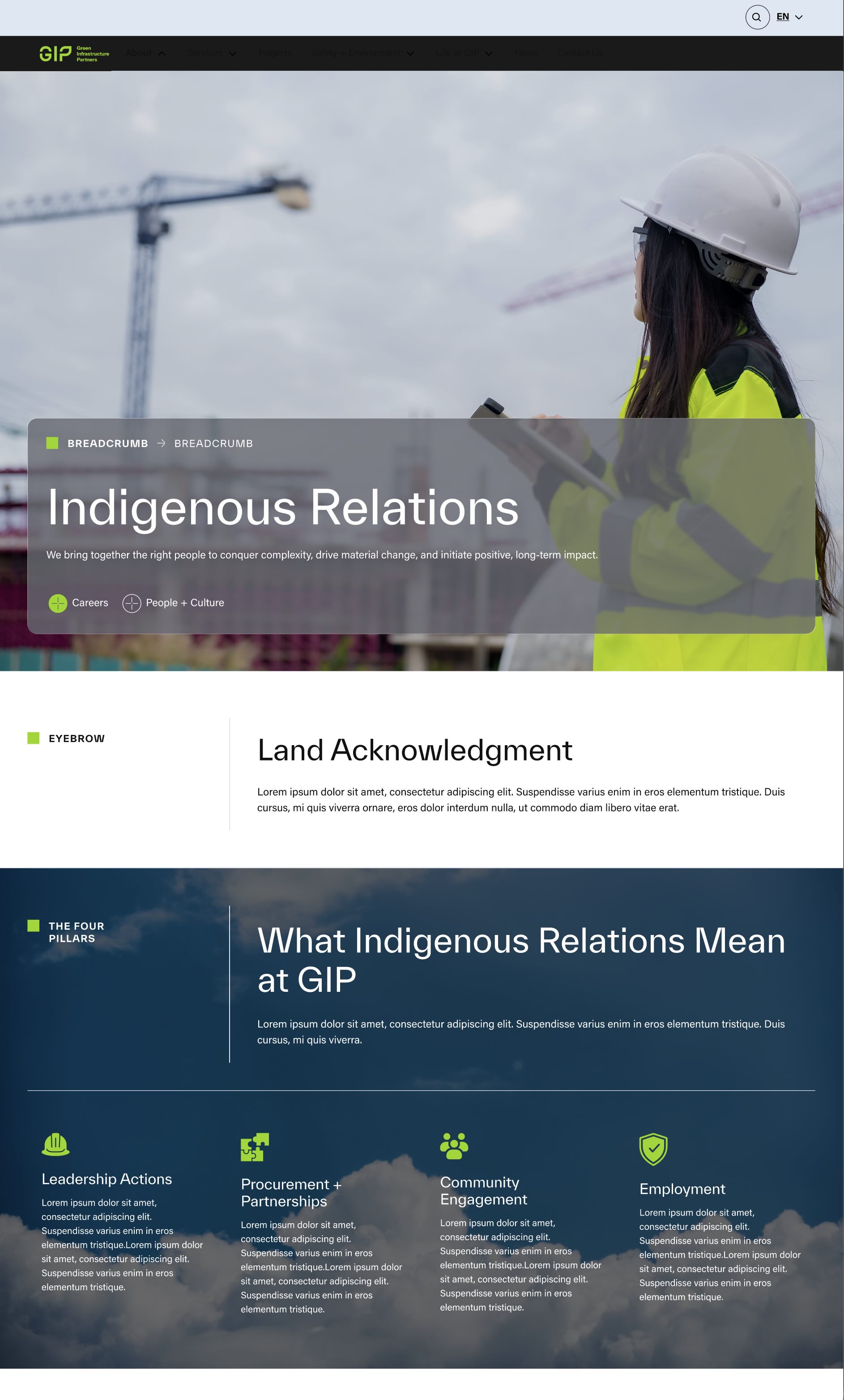
We redesigned GIP’s website to function as a credibility and proof platform—aligning the digital experience with the organization’s true scale, capabilities, and operational maturity following rapid growth through acquisition.
The work focused on improving two primary user journeys:
Prospective clients and RFP partners, validating capability, geographic coverage, safety, and past work before initiating high-stakes procurement conversations
Careers and talent, understanding safety culture, values, and long-term growth opportunities within a large, integrated organization
By clarifying proof signals and integrating post-acquisition narratives, the site reduced ambiguity during early evaluation, supporting confident decision-making without relying on direct outreach.
The Work
1/3
Enterprise Credibility by Design
We reframed the website from a marketing brochure into a proof-driven system that surfaces projects, certifications, safety records, and scale as first-class signals.
We unified fragmented service language and business-unit narratives into a coherent capability model that reflects how GIP actually operates.
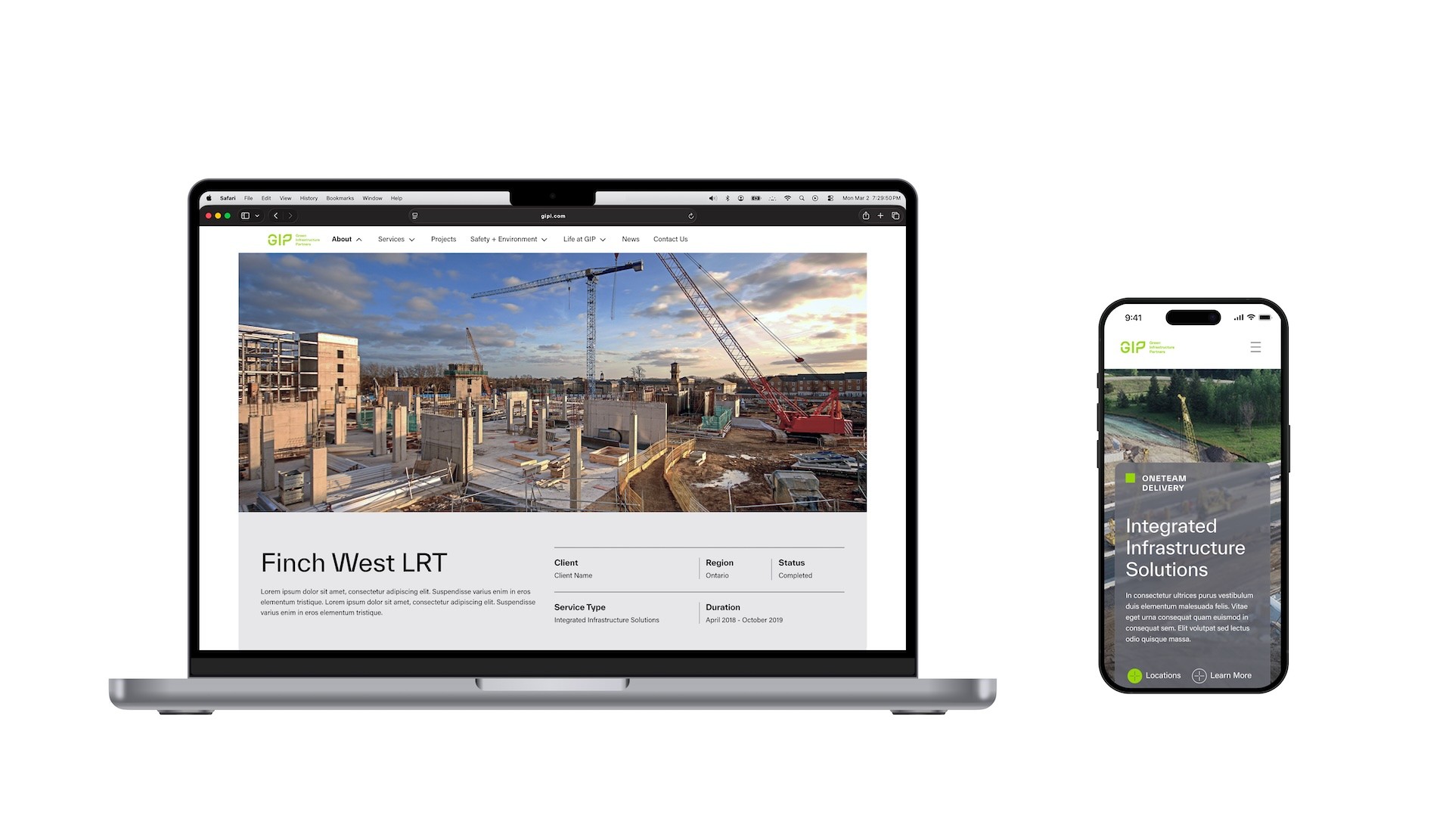
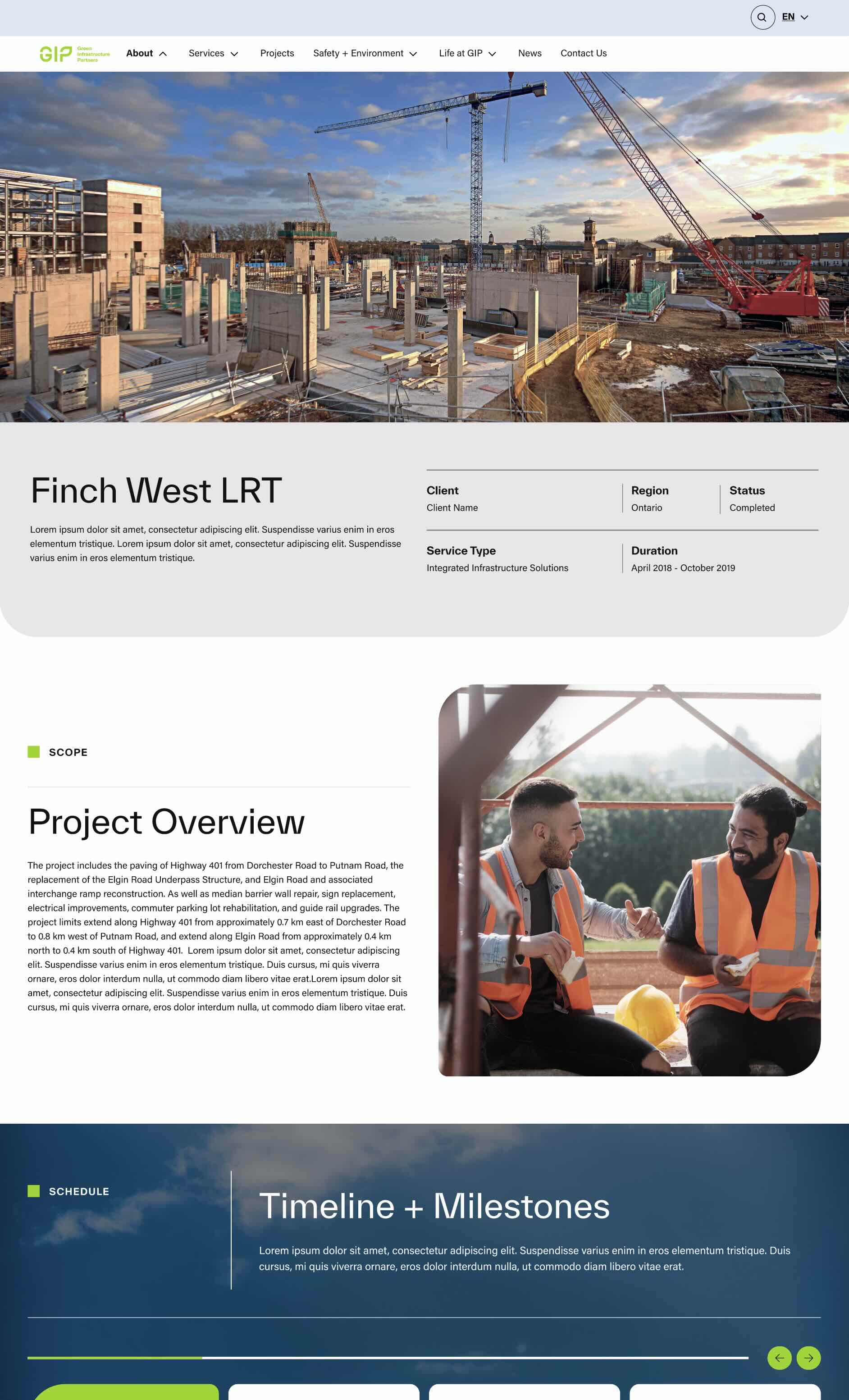
We designed public-facing case studies as credibility signals—highlighting scope, service lines, and geography without over-disclosing proprietary detail.
2/3
Talent Acquisition Experience Strategy
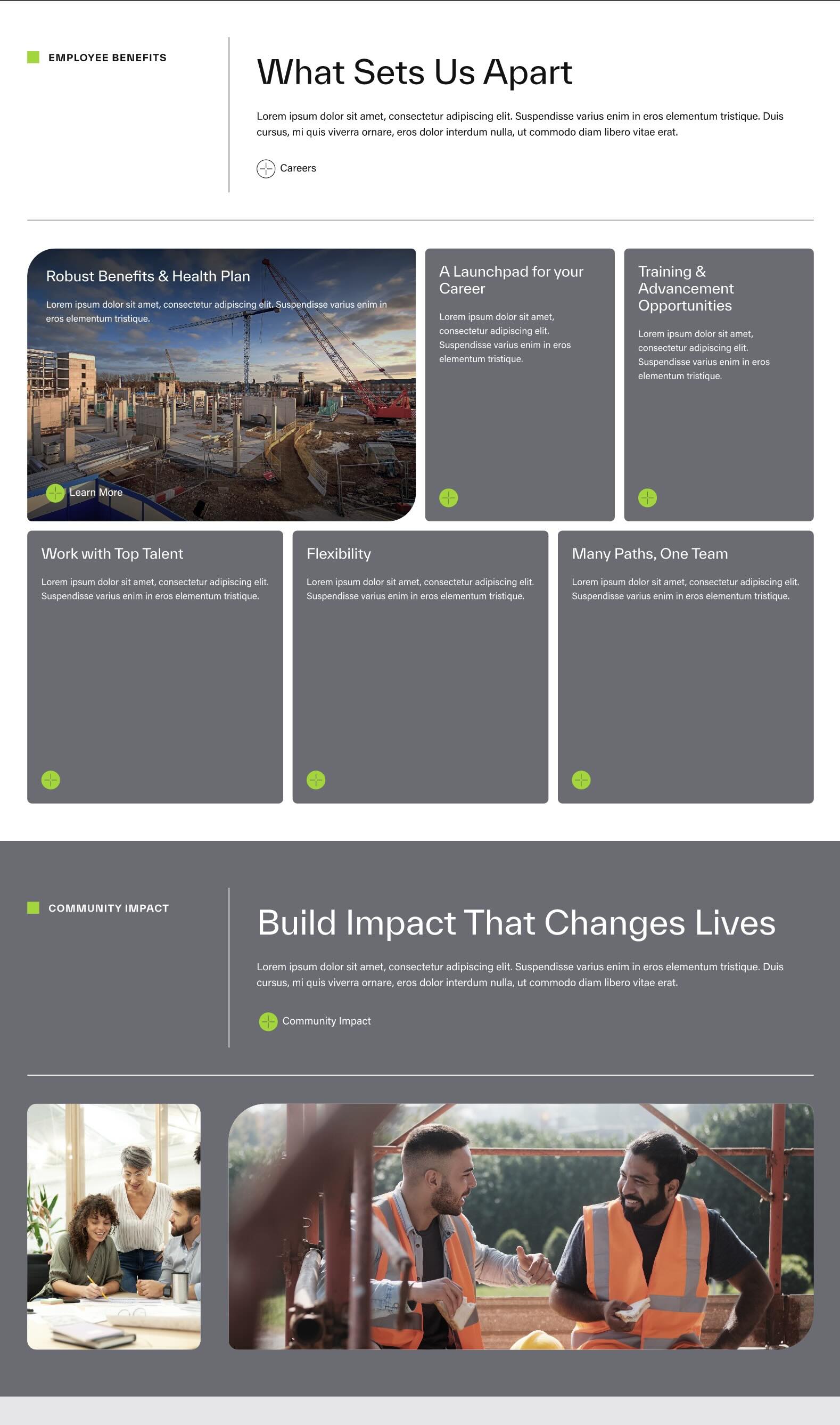
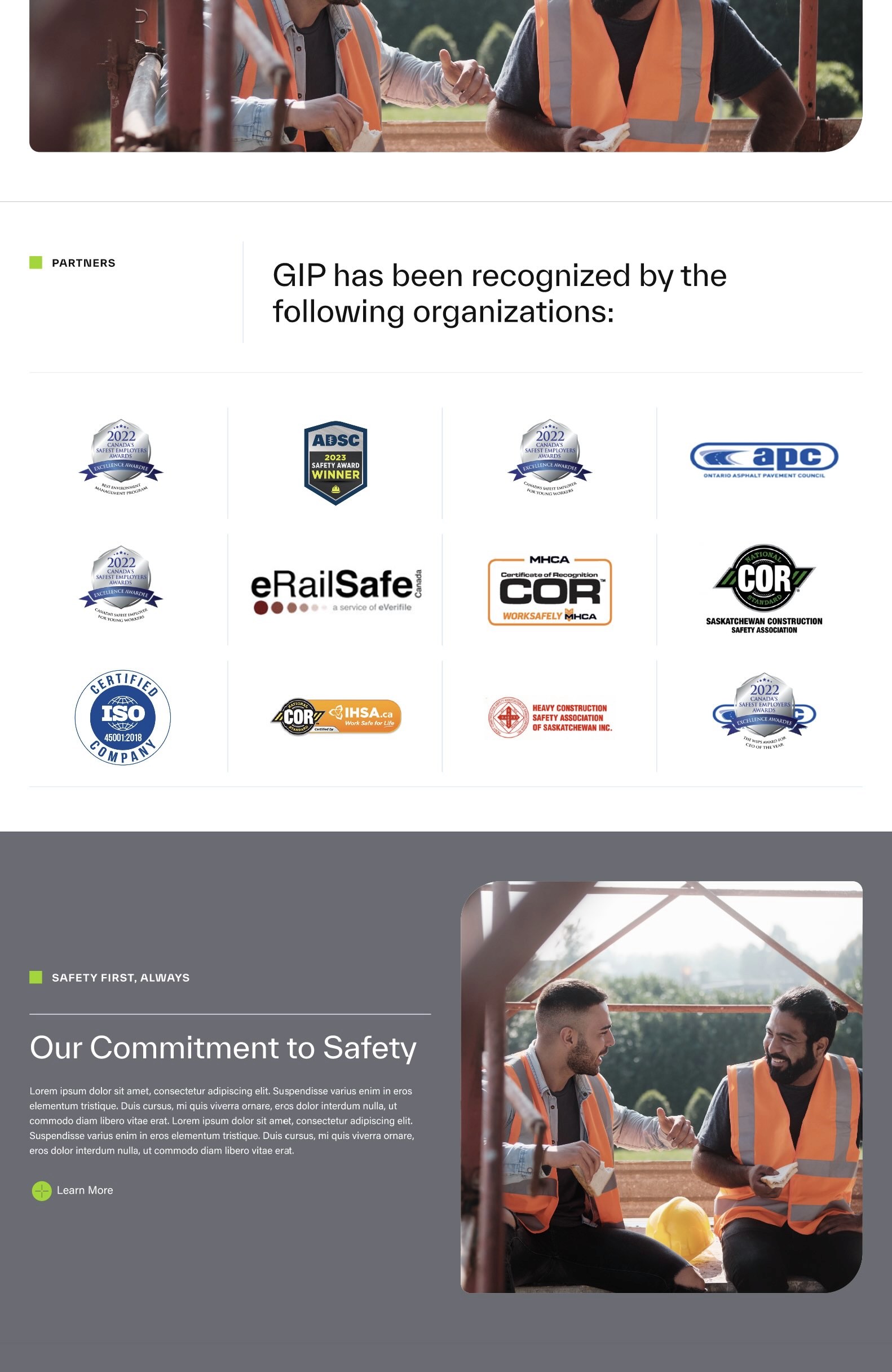
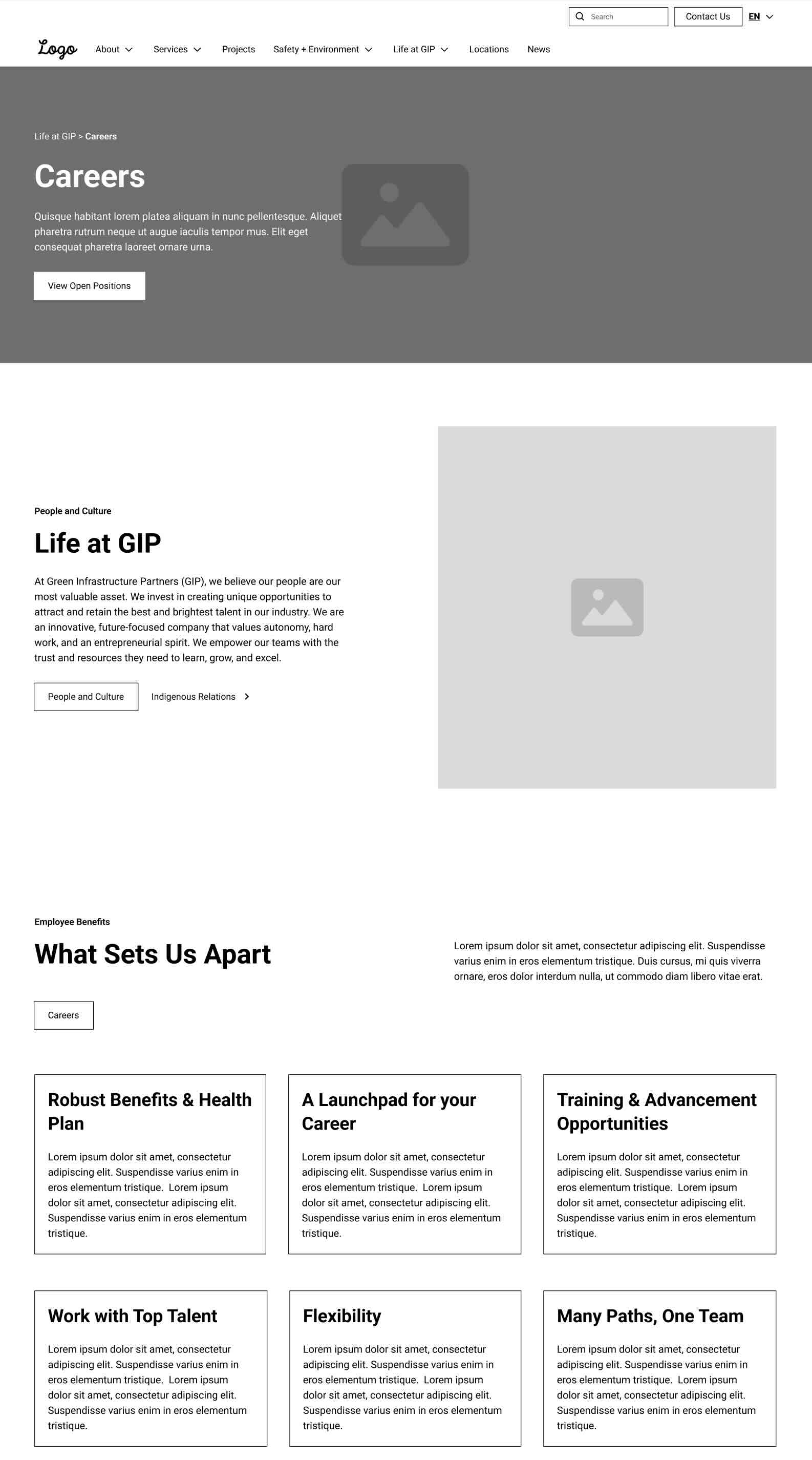
I restructured job seeker–facing pages — including Careers, People & Culture, Safety, and Indigenous Relations to position GIP as a desirable workplace for prospective employees.
Rather than treating these as secondary marketing content, I reframed them as a decision-support system that helped candidates understand expectations, growth pathways, and organizational values before applying.
3/3
National Capabilities Mapping
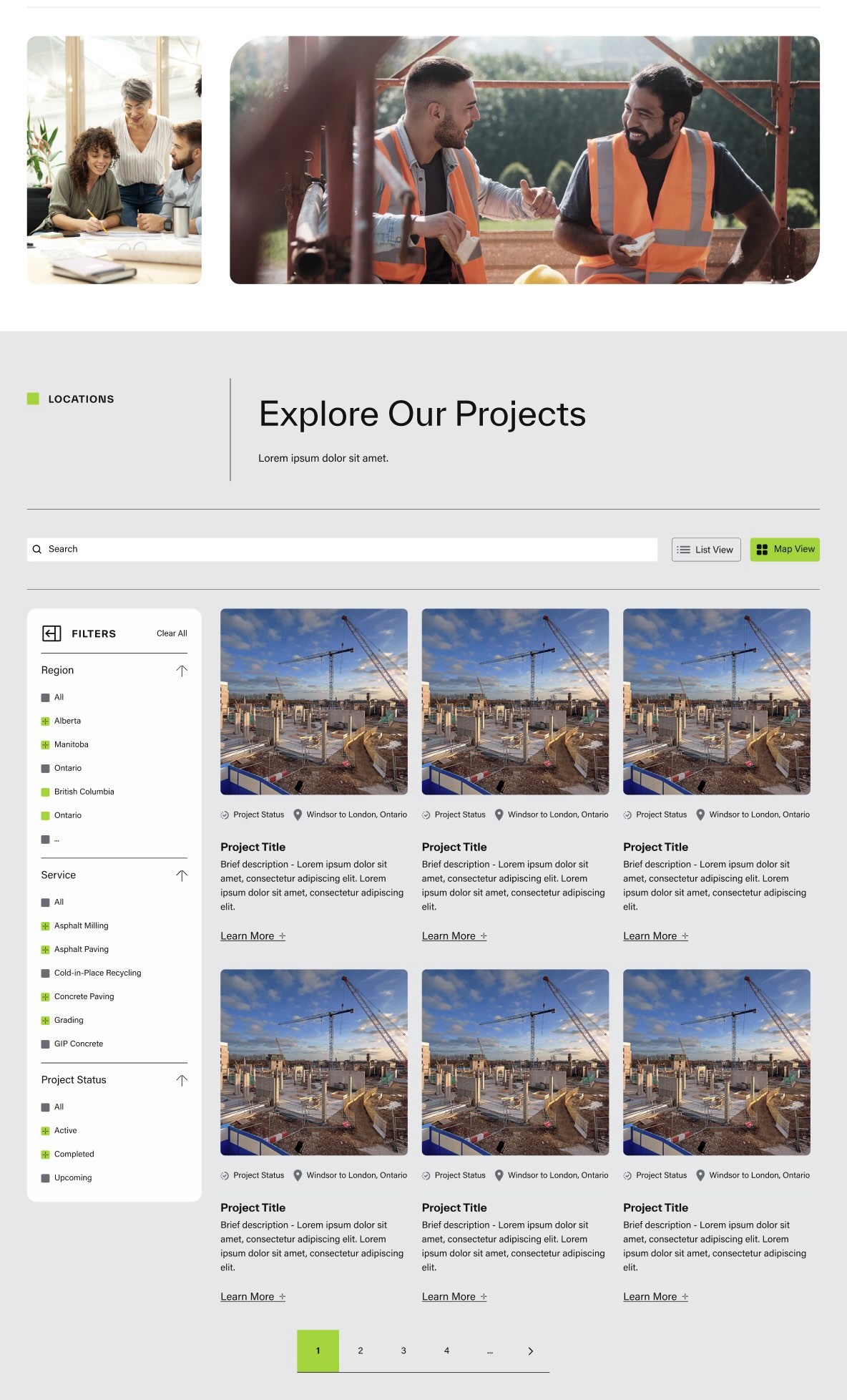
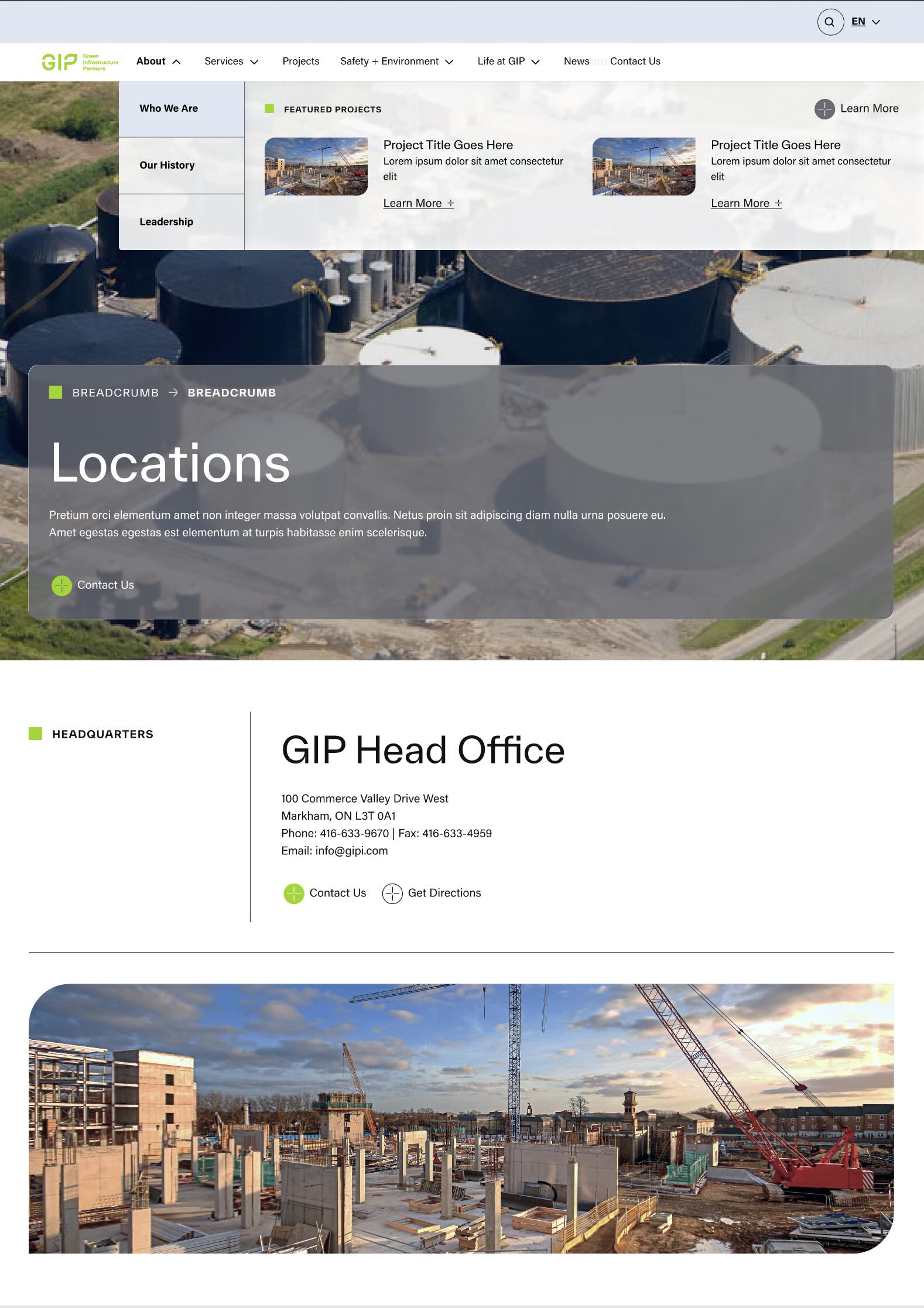
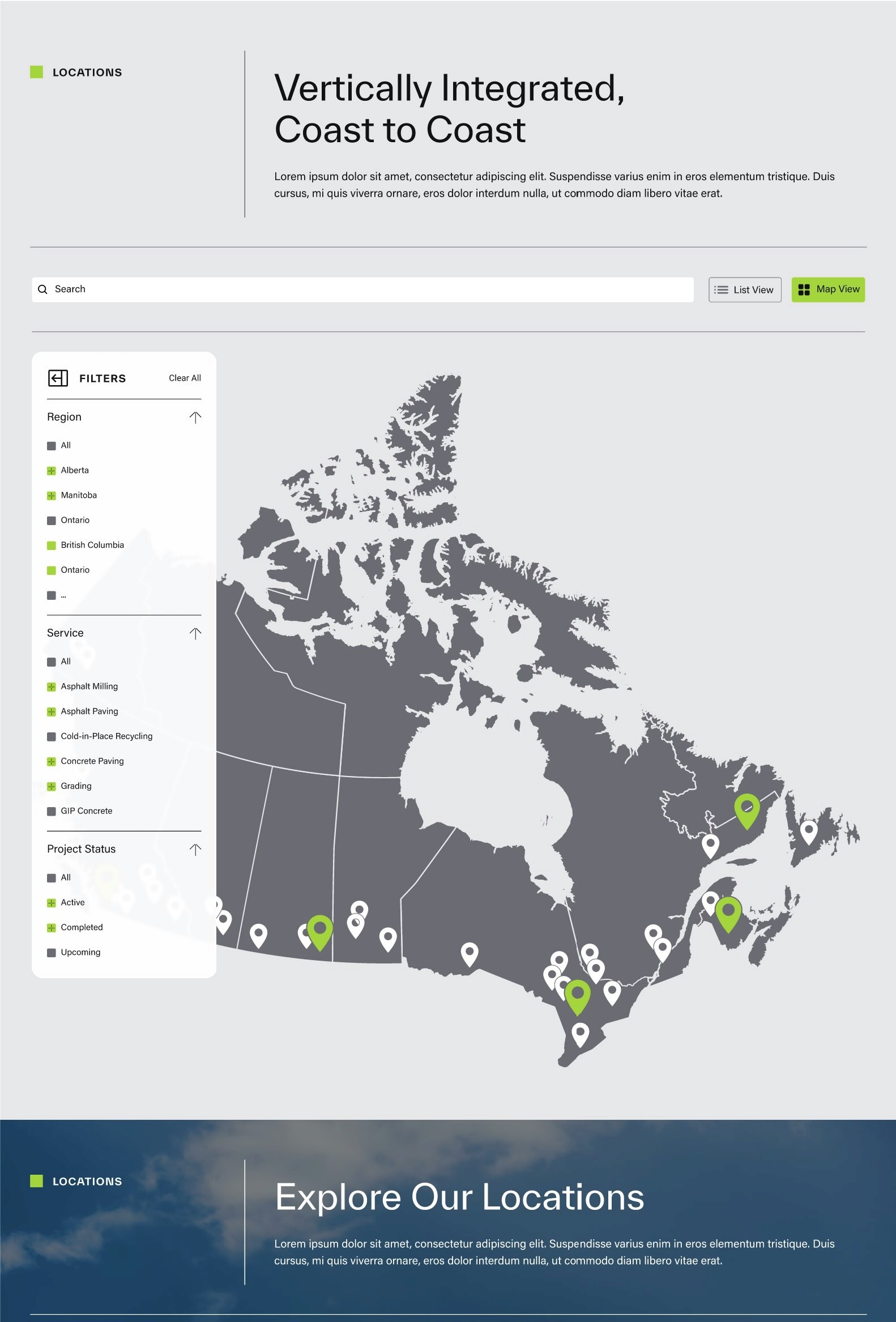
To communicate GIP’s coast-to-coast presence, we designed a map-driven experience that translated geographic scale into clear operational capability. I helped structure the feature to connect regions, services, and project types through location pages that demonstrated what GIP delivers — and where.
Rather than a static coverage map, the system allowed users to understand local expertise within a national footprint, reinforcing both scale and credibility across markets.
The Process
Research & Discovery
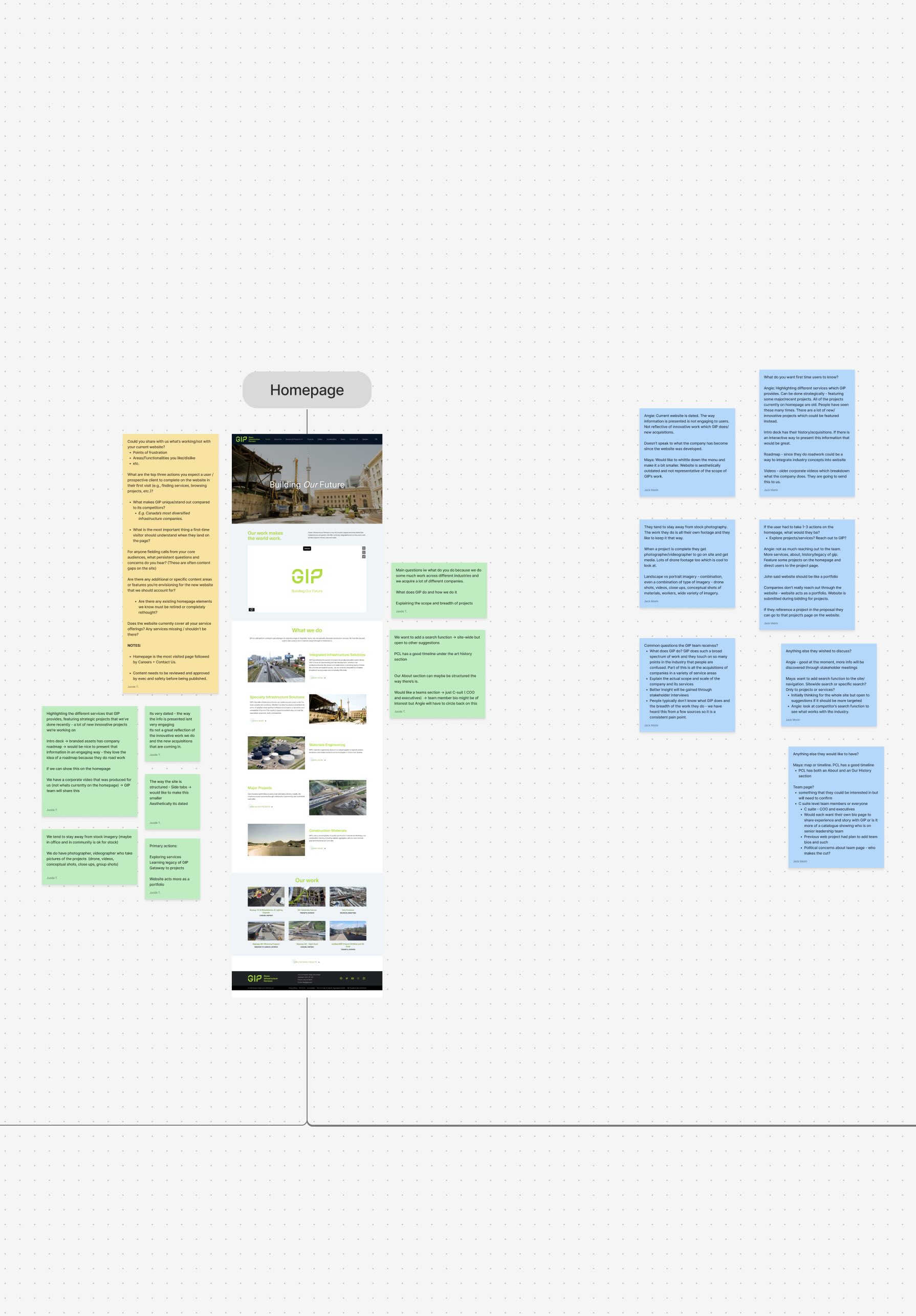
I reviewed analytics, conducted stakeholder interviews, and completed competitive analysis to understand how procurement partners, talent, and regulators assess credibility.
Solution Design
I translated insights into a unified information architecture, service taxonomy, and modular templates supporting proof, comparison, and scale.
UI & Development
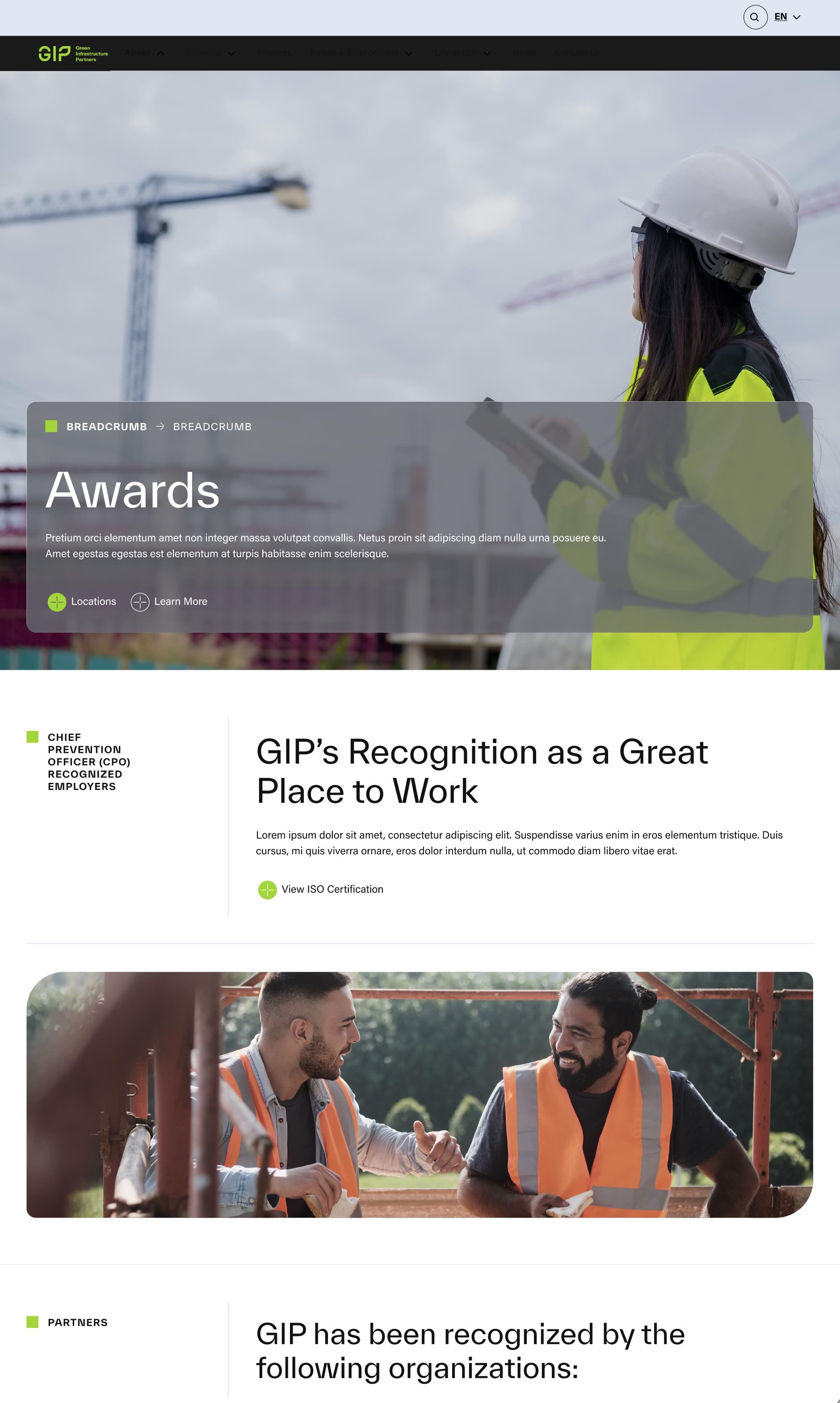
I worked closely with UI and development teams to ensure designs were performance-aware, authorable, and sustainable within CMS and governance constraints.
The Fine Print
Context & Constraints
GIP operates in a risk-sensitive, RFP-driven industry where uncertainty defaults to exclusion. The website needed to support verification, not conversion, while remaining accurate, legally defensible, and maintainable across distributed teams. Rapid acquisition growth required a structure that could absorb new capabilities without degrading clarity or trust.
Guiding User Questions & Insights
Procurement audiences needed to quickly answer: Can this firm deliver work like mine, where I need it, safely? Talent sought confirmation that safety, growth, and values were real—not aspirational. Across both journeys, evidence mattered more than claims.
UX Strategy
The strategy shifted the site from fragmented pages to a connected proof system. Unified service taxonomy, cross-linked projects, and consistent templates enabled self-validation. Careers content was designed as narrative context rather than standalone recruitment marketing.
Tradeoffs & Design Decisions
While visual impact was important, performance, clarity, and maintainability were prioritised over media-heavy layouts. Proof was elevated through structure and hierarchy rather than volume or spectacle.
Collaborative Workshops
Design decisions were shaped through workshops and reviews with leadership, HR, marketing, and business-unit stakeholders to align on credibility, governance, and growth.
Key Pages
Core systems included service pages, project libraries, safety and certification content, and careers and culture narratives—designed to work together as a cohesive credibility platform.
Reflection
This project strengthened my ability to:
Design for enterprise credibility
Integrate post-acquisition complexity
Model trust signals instead of conversions
Key takeaway: In national-scale infrastructure, credibility isn’t just implied by size — it must be demonstrated through clarity, proof, and operational transparency.
Project Credits
My Contributions
Wireframing and Prototyping
UX research
Information architecture and taxonomy
Design system creation
Pathway mapping
User decision modelling
Content strategy recommendations
Visual design ideation
Team
Juode AlTaher - UX Team Lead
Kay Drobot - UI Designer
Steven Martz - Creative Director
Jarret McKee - Copywriter
Ryan Aceman - Director of Brand Strategy
Lana Brach - Project Manager
Lucy Gregory - Director of Project Management
Image Copyright Green Infrastructure Partners 2026.