Designing a trauma-informed service and resource hub for Survivors of Intimate Partner Violence
Role
UX Designer & Researcher
Timeline
2025 - 2026
Project Type
Public Interest, Trauma-Informed UX, Service Design, Resource Aggregation
Status
Design Complete, Implementation in Progress
MHAVEN is an initiative founded by the Waypoint Centre for Mental Health. This initiative supports people affected by intimate partner and gender-based violence, operating as a public resource at the intersection of mental health care, social services, and research.
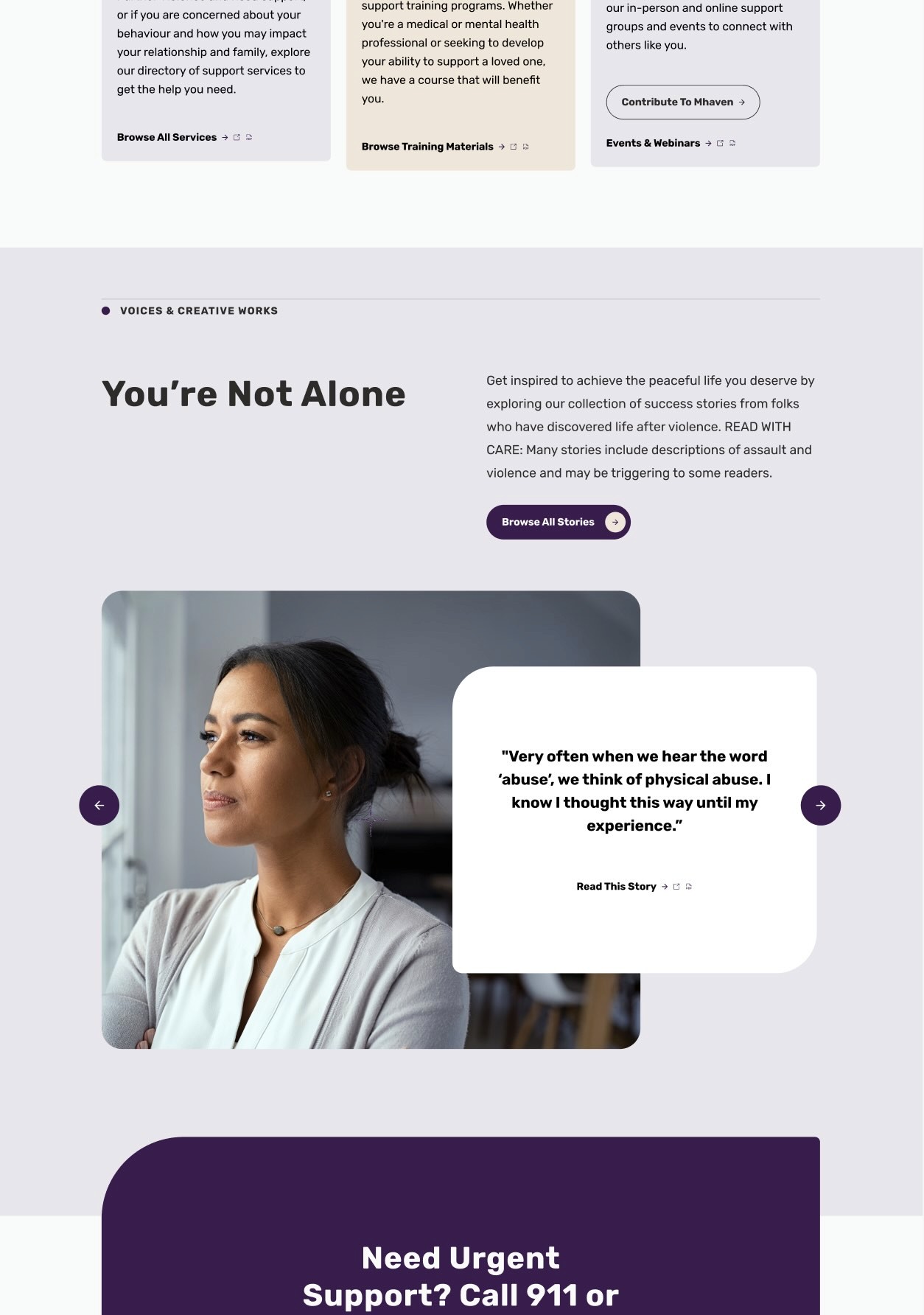
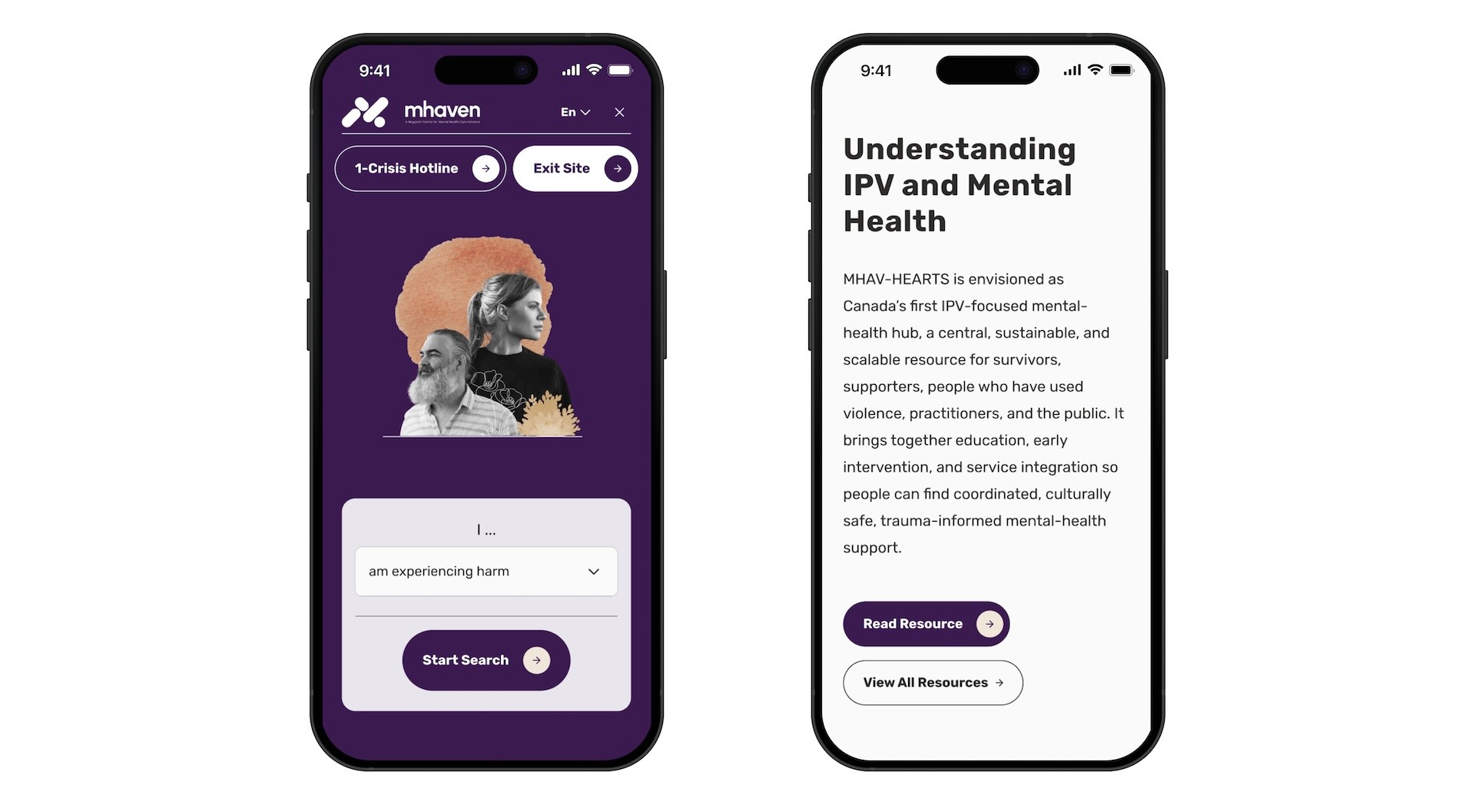
We designed MHAVEN / WAY as a trauma-informed digital hub that helps people navigate support safely, privately, and at their own pace—without forcing disclosure, diagnosis, or self-identification.
The work prioritised one primary journey:
Survivors seeking help, often under conditions of stress, uncertainty, and limited privacy
Additional journeys were supported with care and separation:
Supporters helping someone they care about
Clinicians and mental health professionals seeking guidance and referral resources
Individuals who have used violence and are seeking behaviour-change support
The general public seeking education and understanding
By clarifying pathways and reducing service fragmentation, the platform supports safer discovery while respecting dignity and agency.
The Work
1/3
Survivor-First Pathways
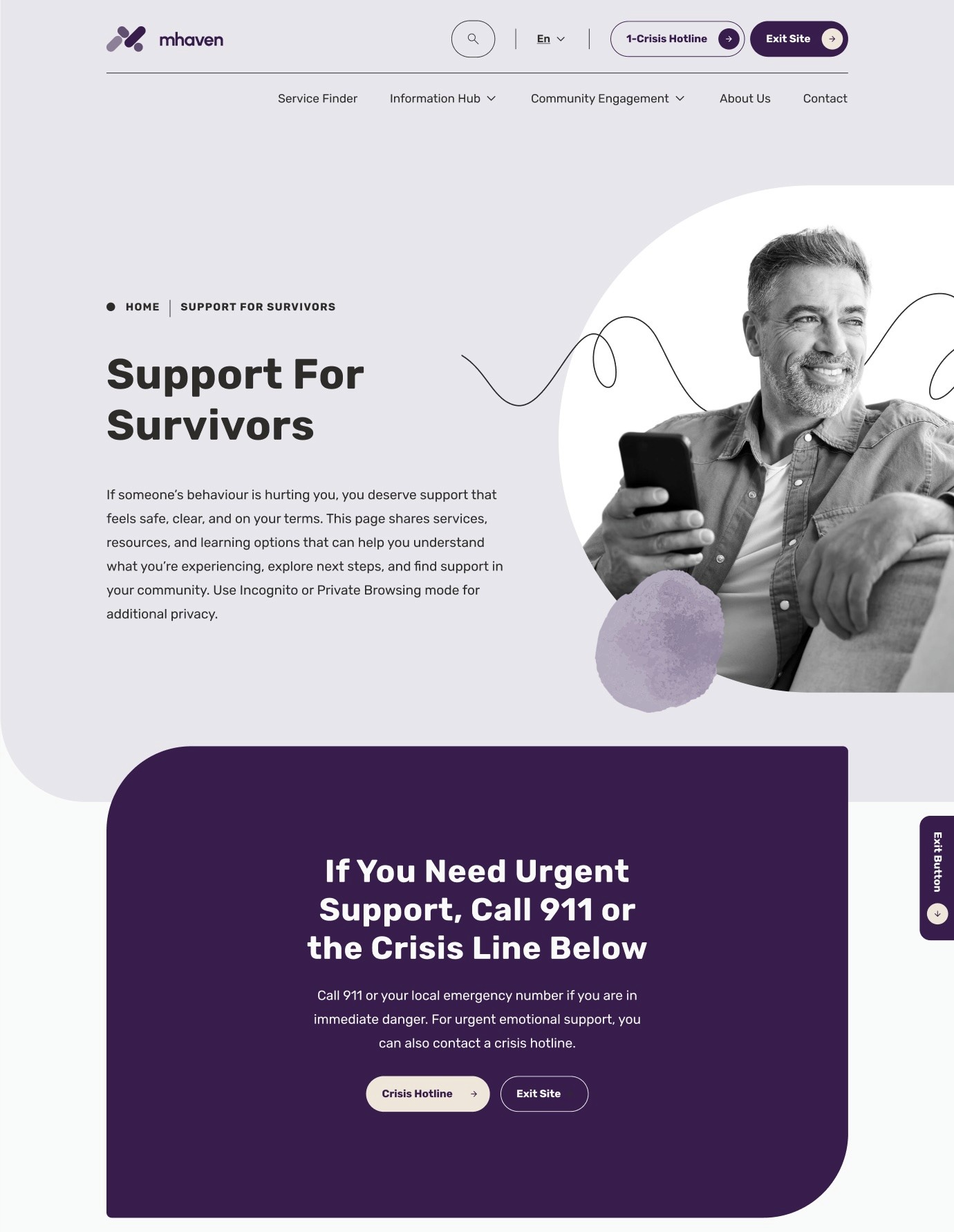
I designed parallel crisis and reflective pathways, allowing users to seek immediate help or explore options without pressure.
I structured content around validation and choice, avoiding diagnostic or triggering language throughout the experience.
2/3
Safety-Critical UX Patterns
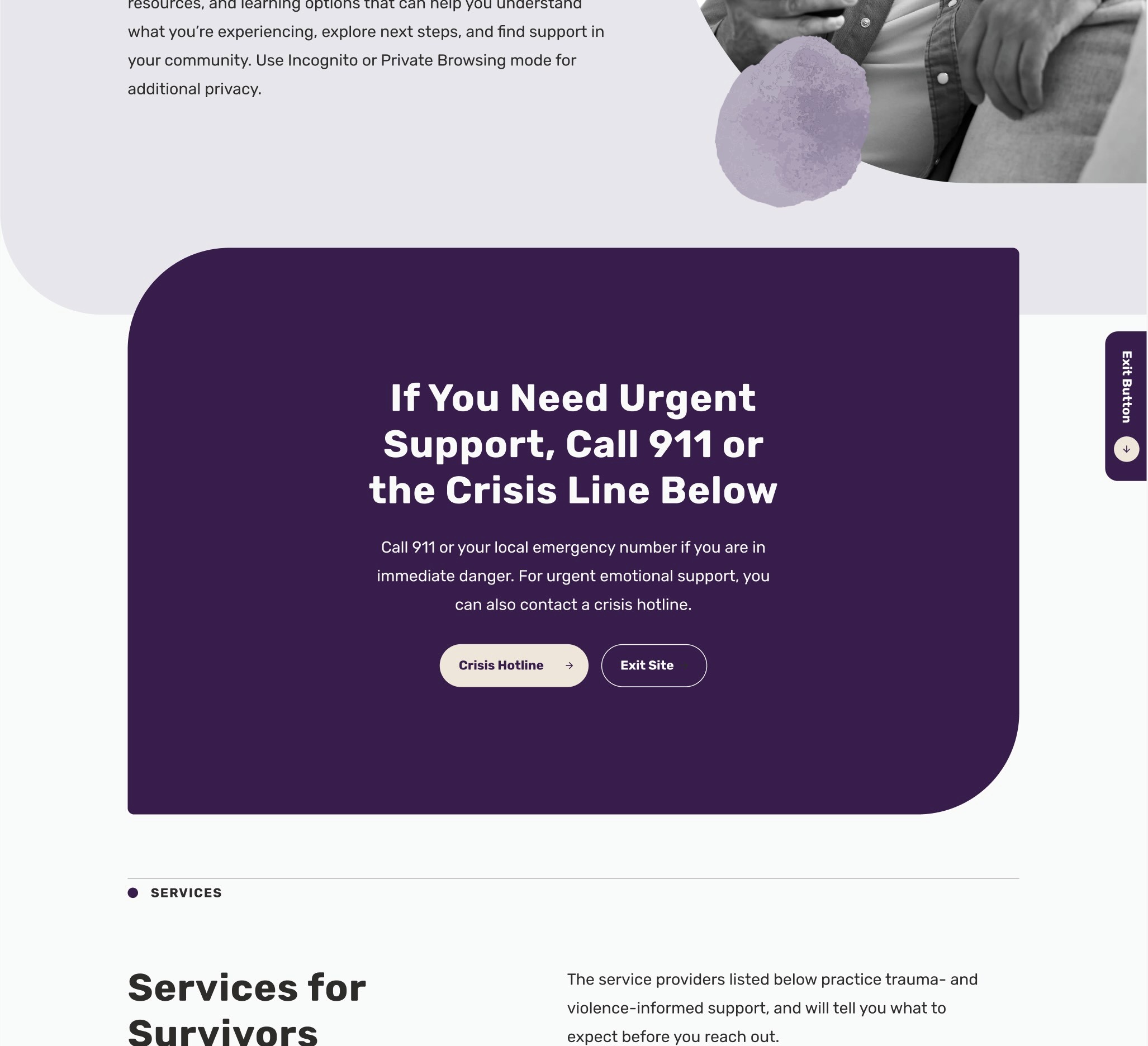
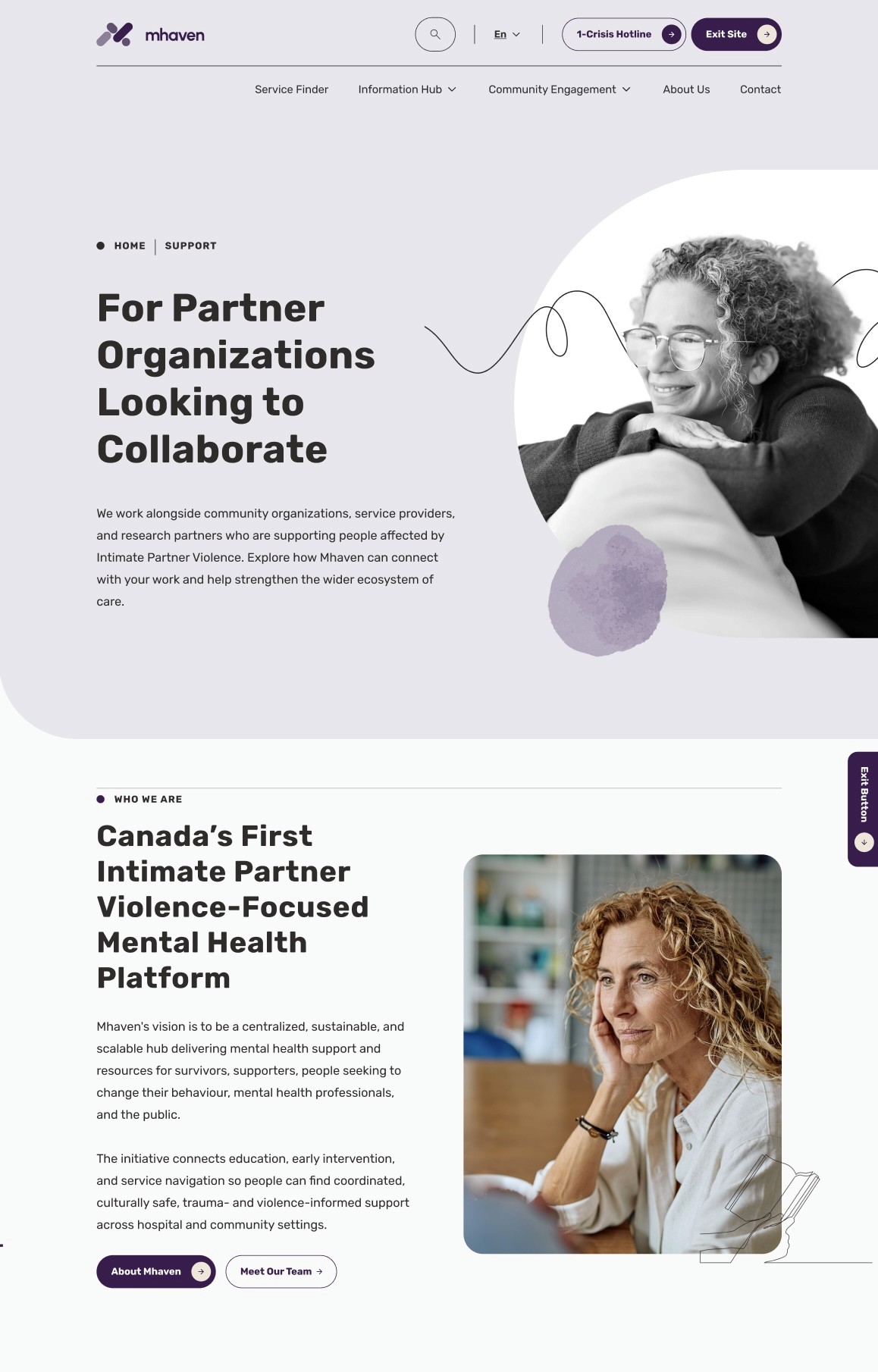
We designed a discreet Exit Site mechanism and privacy guidance to support shared-device use and unpredictable browsing contexts.
3/3
Safe Service Discovery
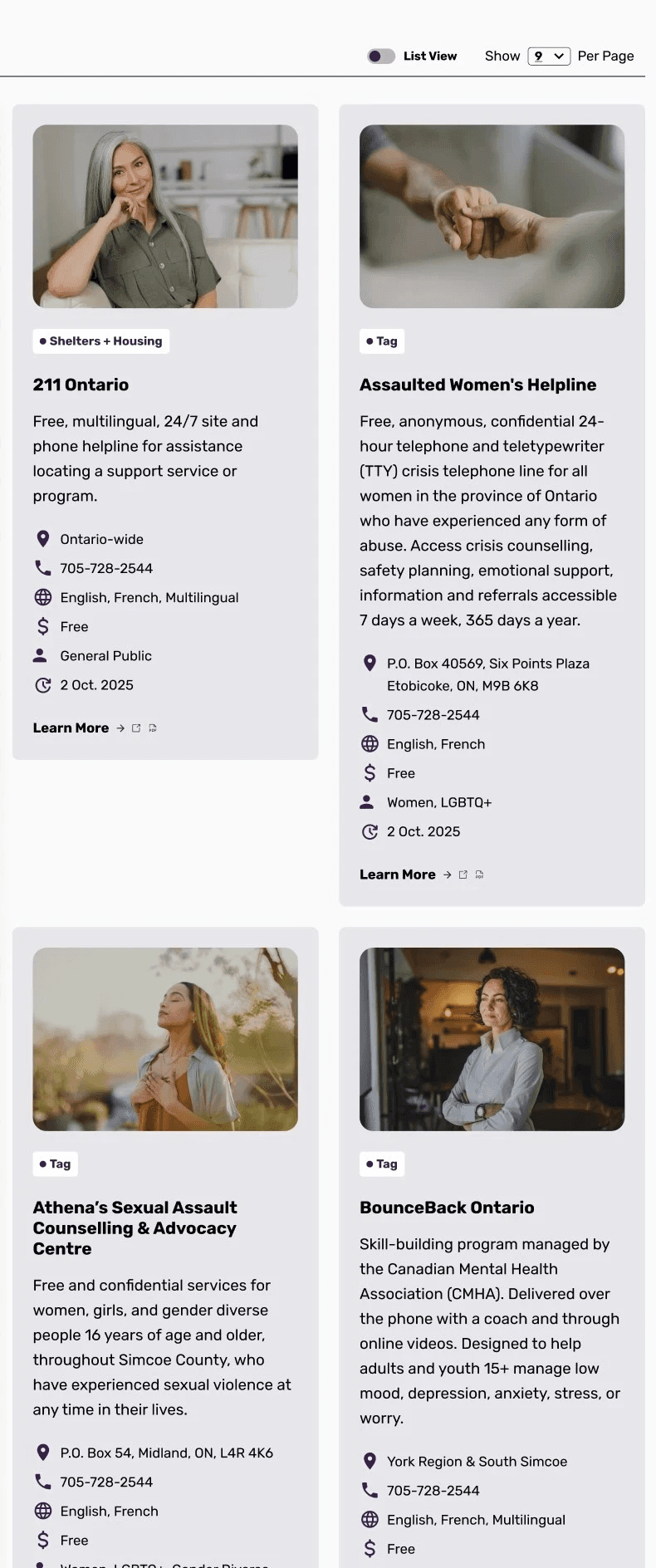
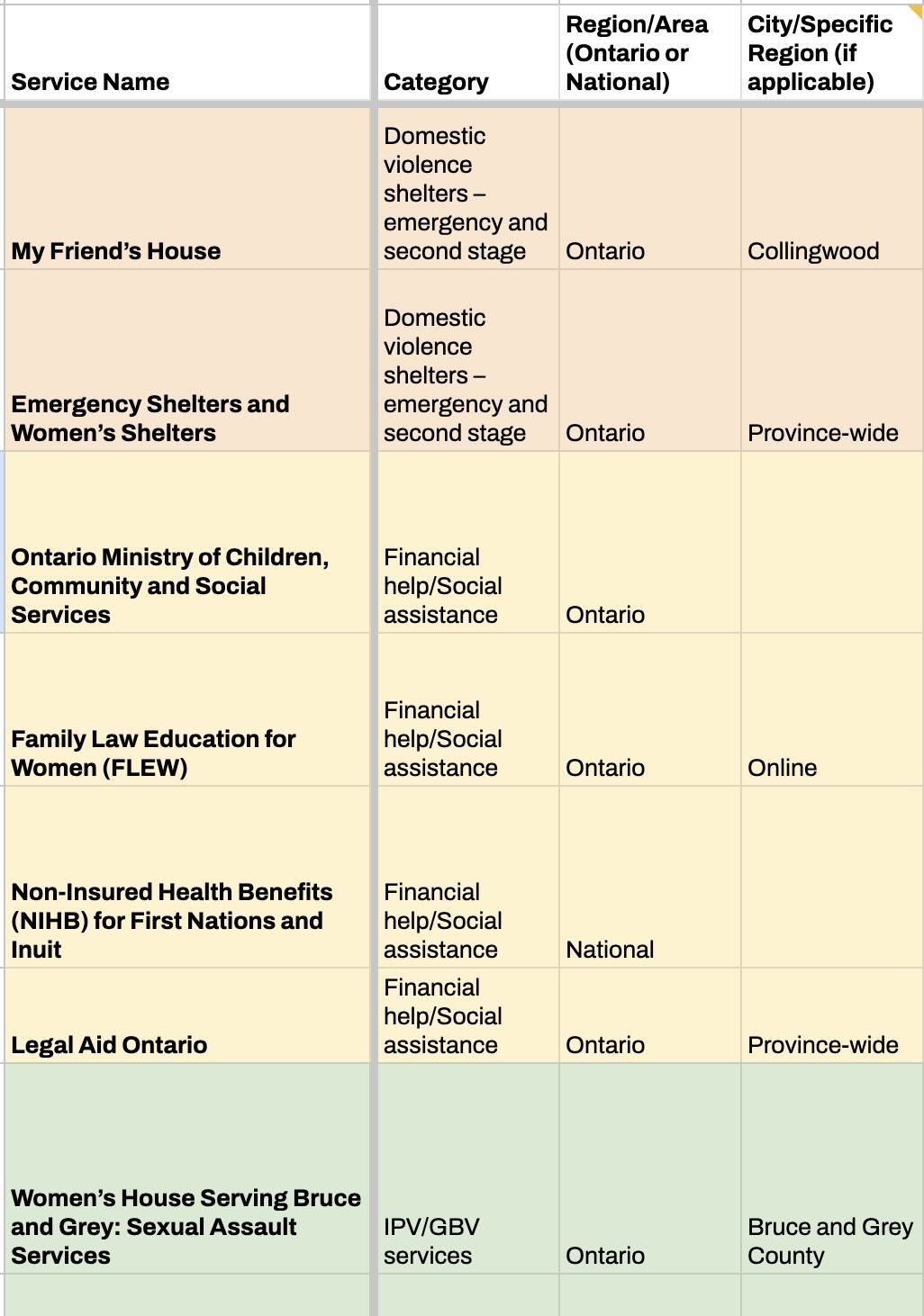
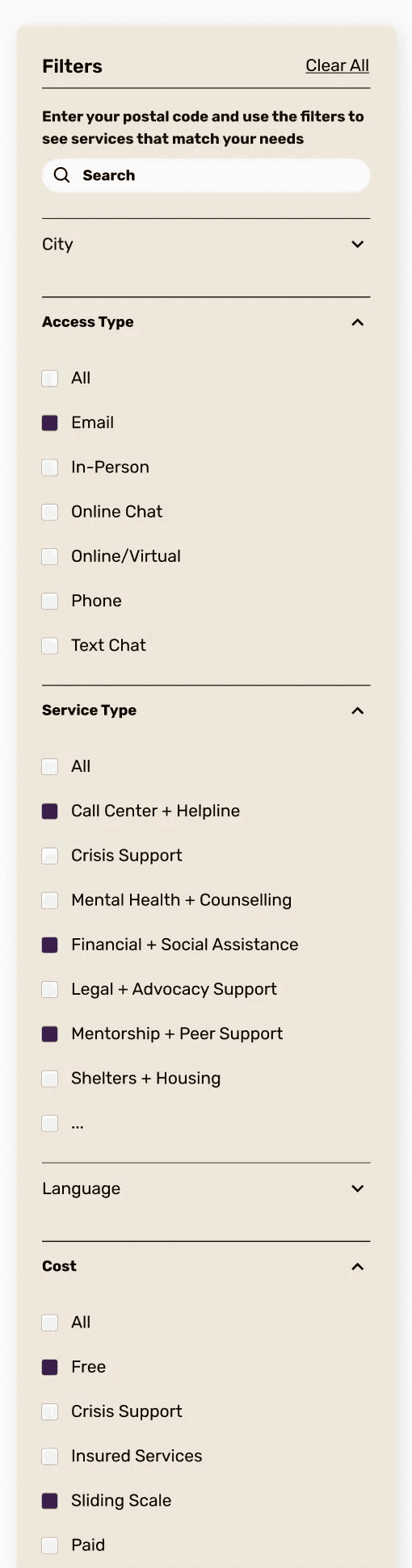
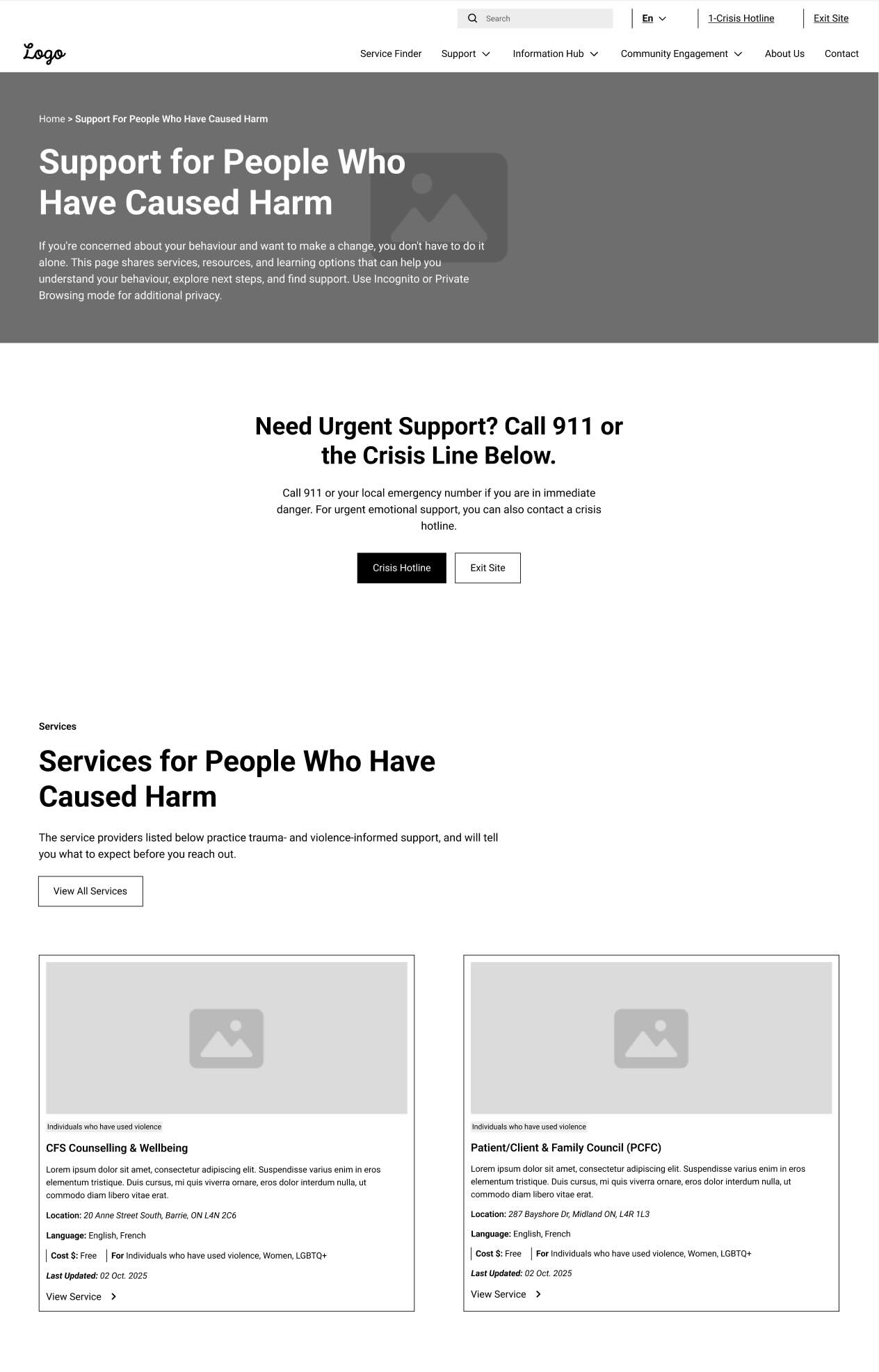
I aggregated trusted services across crisis, legal, housing, and mental health support—organized by user goals rather than provider categories.
I created flexible taxonomy and location-aware structures to support growth beyond the initial regional launch.
The Process
Research & Discovery
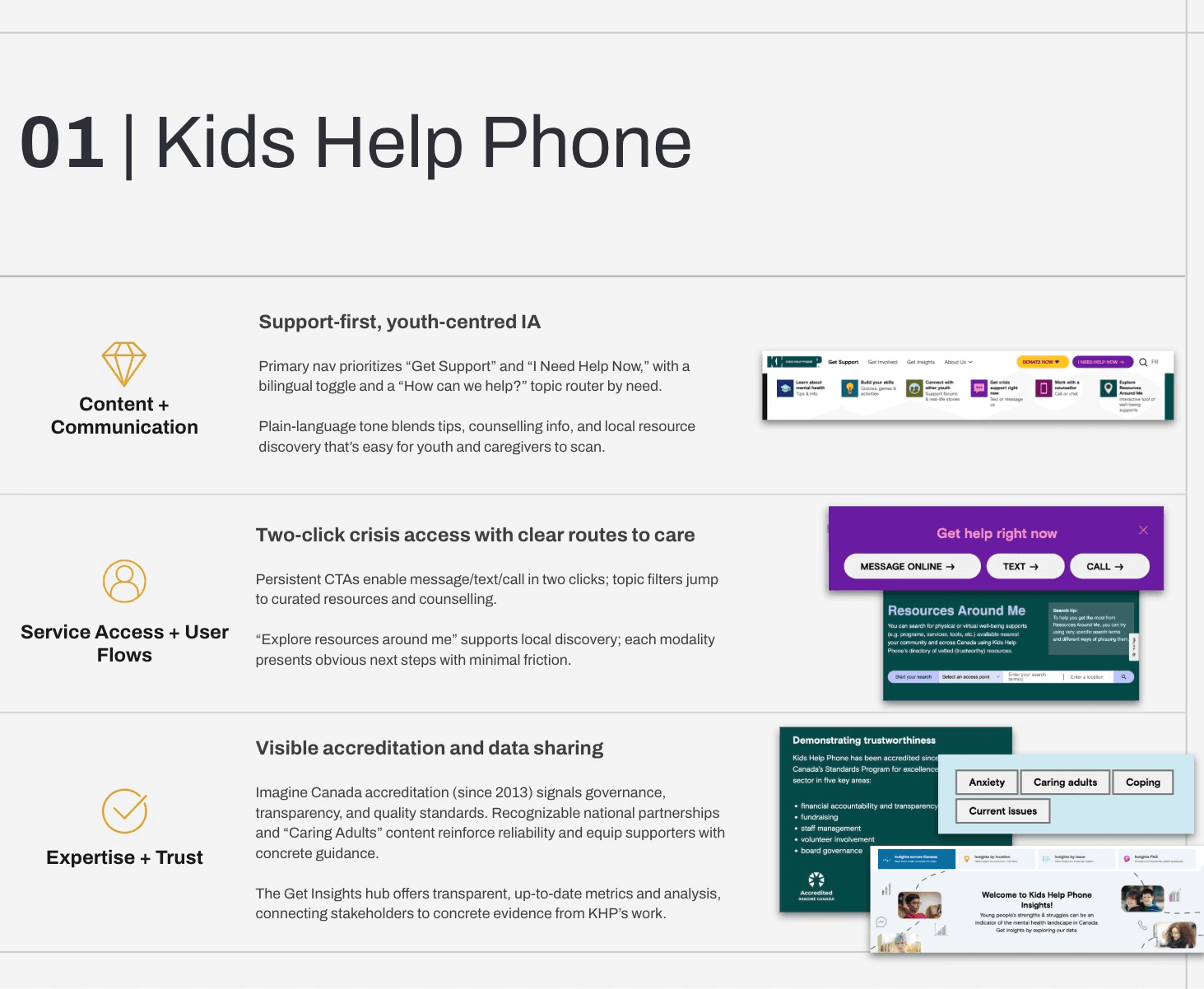
I worked with clinicians, researchers, and trauma specialists as ethical proxies for survivor experience, alongside analytics and competitive review of safety-oriented platforms.
Solution Design
I translated insights into a calm, predictable information architecture with clear audience pathways and safeguards against retraumatization.
UI & Development
I partnered with UI and development teams to ensure safety patterns, accessibility, and multilingual readiness were embedded into the build.
The Fine Print
Context & Constraints
MHAVEN operates as a public good, not a commercial funnel. Safety-critical constraints included shared device use, privacy by default, no tracking or accounts, careful audience separation, and the avoidance of violent or sensational imagery. Design prioritised agency and neutrality over efficiency.
Guiding User Questions & Insights
Survivors needed reassurance before action: Is this happening to me? What options do I have? Can I look safely? Other audiences required clarity without causing harm. Across all journeys, confidence before commitment mattered more than speed.
UX Strategy
The strategy centred on decision support rather than persuasion. Clear pathways, progressive disclosure, and predictable layouts enabled users to orient themselves quickly while maintaining emotional safety.
Tradeoffs & Design Decisions
Conventional engagement and optimization patterns were intentionally avoided. Instead, the experience favoured clarity, restraint, and user control—even when this reduced measurable interaction.
Collaborative Workshops
Design decisions were shaped through workshops with clinicians, researchers, and service providers to ensure ethical alignment and practical relevance.
Key Pages
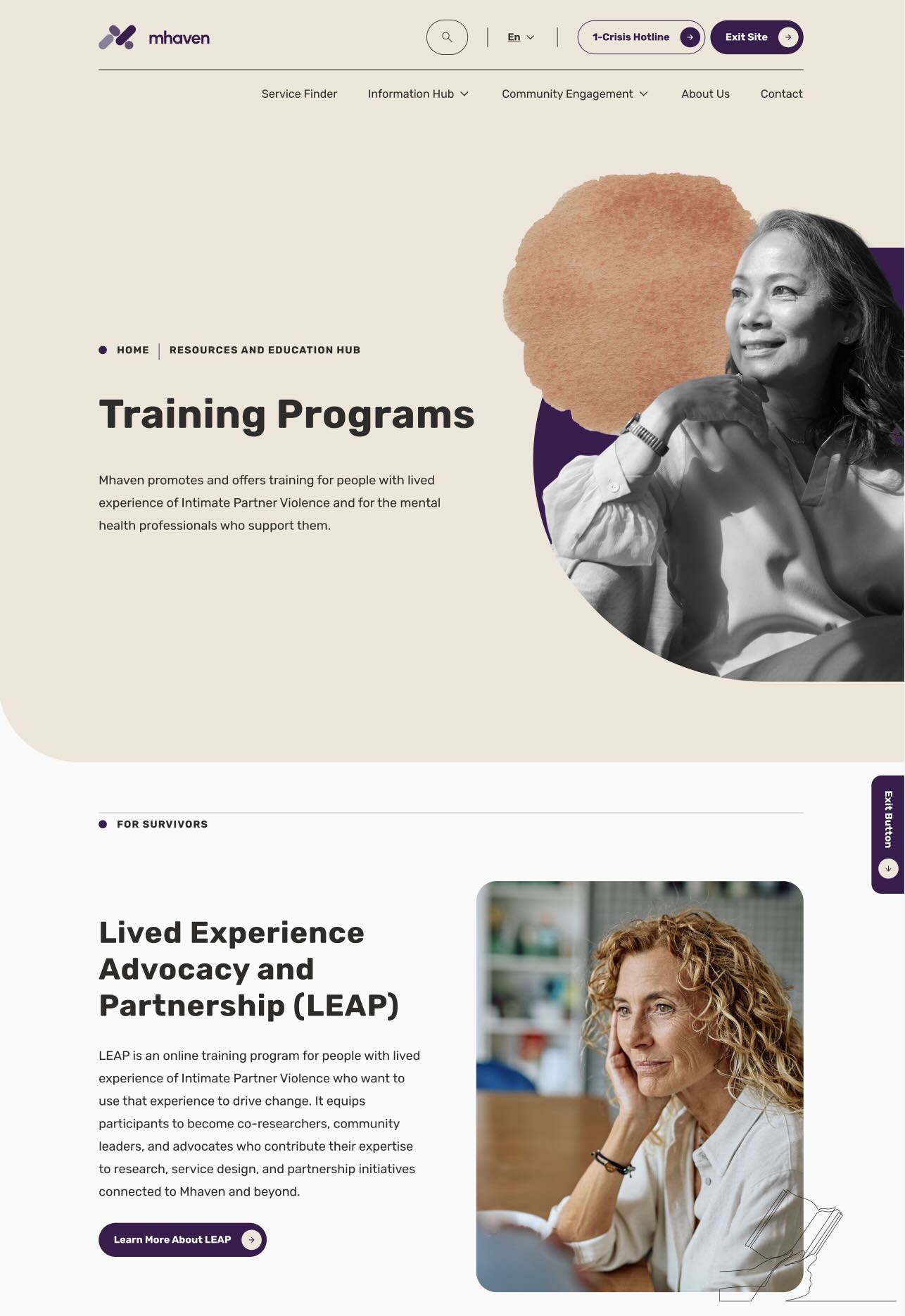
Core systems included survivor pathways, service discovery tools, crisis routing, supporter guidance, clinician resources, and carefully separated behaviour-change content.
Reflection
This project strengthened my ability to:
Design for vulnerability and safety
Balance ethics with usability
Model complex service ecosystems
Work without behavioural analytics
Collaborate with clinicians and researchers
Prioritize dignity, agency, and neutrality over engagement
Key takeaway: Not all UX optimises for speed. In trauma-informed systems, safety and agency are usability.
Project Credits
My Contributions
Wireframing and Prototyping
Research synthesis
Service finding, taxonomy, and IA
Trauma-informed UX strategy
Content strategy recommendations
Exit Site pattern design
Provider workshops
Team
Juode AlTaher - UX Team Lead
Kay Drobot - UI Designer
Steven Martz - Creative Director
Jarret McKee - Copywriter
Ryan Aceman - Director of Brand Strategy
Georgia Hines - Project Manager
Lucy Gregory - Director of Project Management
Image Copyright MHAVEN and The Waypoint Centre For Mental Health 2026.